Growth & reach
OnlyFans growth has stalled: a practical account review
Diagnose an OnlyFans plateau through acquisition, conversion, retention, revenue mix and workload, with a clear review template for you or your agency.
Published Updated

A flat revenue chart does not identify the cause of a plateau. The same total can hide fewer new subscribers, weaker renewals, a change in sales mix or simply a different reporting period. The useful first step is to separate those possibilities.
This review is designed for creators who already publish and earn on OnlyFans, including those working with an agency. It provides a decision framework, not a claim about why most accounts fail.
First, define what has actually stalled
Write down the metric, period and comparison. “Revenue after the platform fee was flat across two comparable months” is more useful than “the account is dead”. Keep gross customer payments, platform deductions, refunds, agency fees and the amount you retain distinct. Do not compare a gross figure with a net one.
Also record promotions, price changes, breaks in production and unusual traffic events. One month after a large launch is not automatically comparable with an ordinary month.
Five areas to review
1. Acquisition: are fewer relevant people arriving?
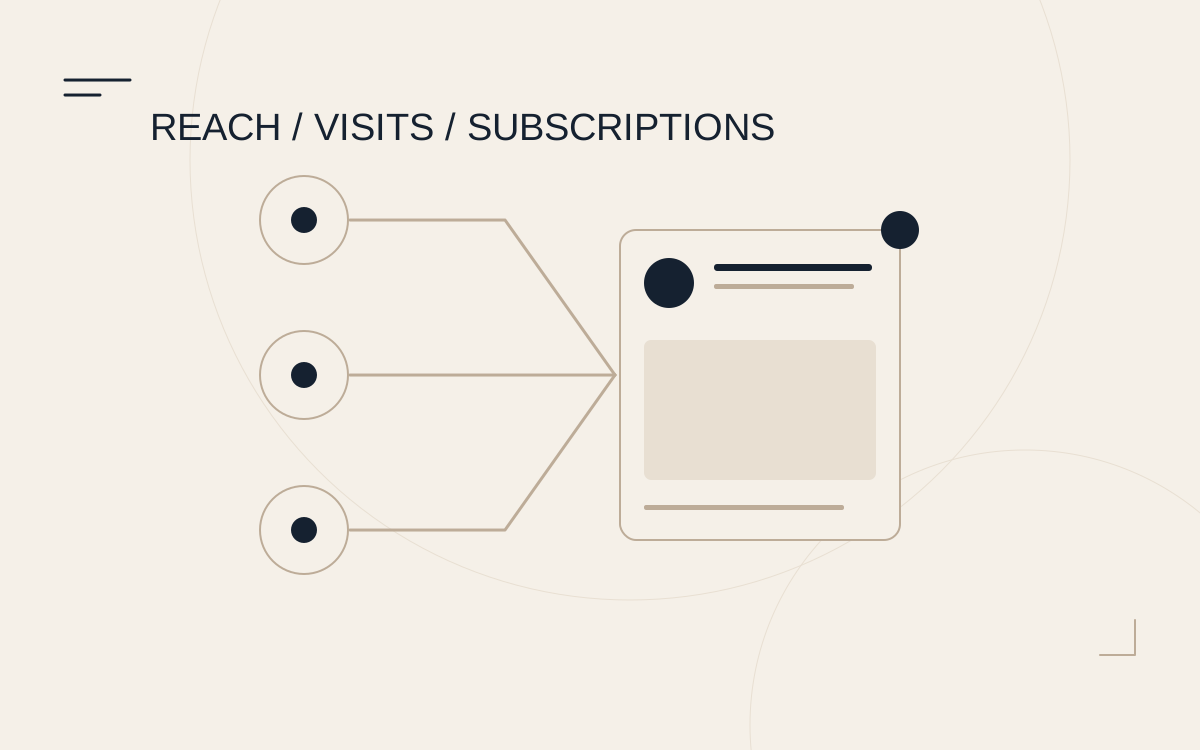
Compare the available traffic indicators by source. If reach has fallen, inspect the content mix and account status before declaring that the whole strategy no longer works. If reach is stable but visits are down, examine whether the content gives the right audience a reason to learn more.
Use the subscriber-growth framework to separate visibility, visits and subscriptions. Where attribution is missing, record the limitation.
2. Conversion: does the offer match the expectation?
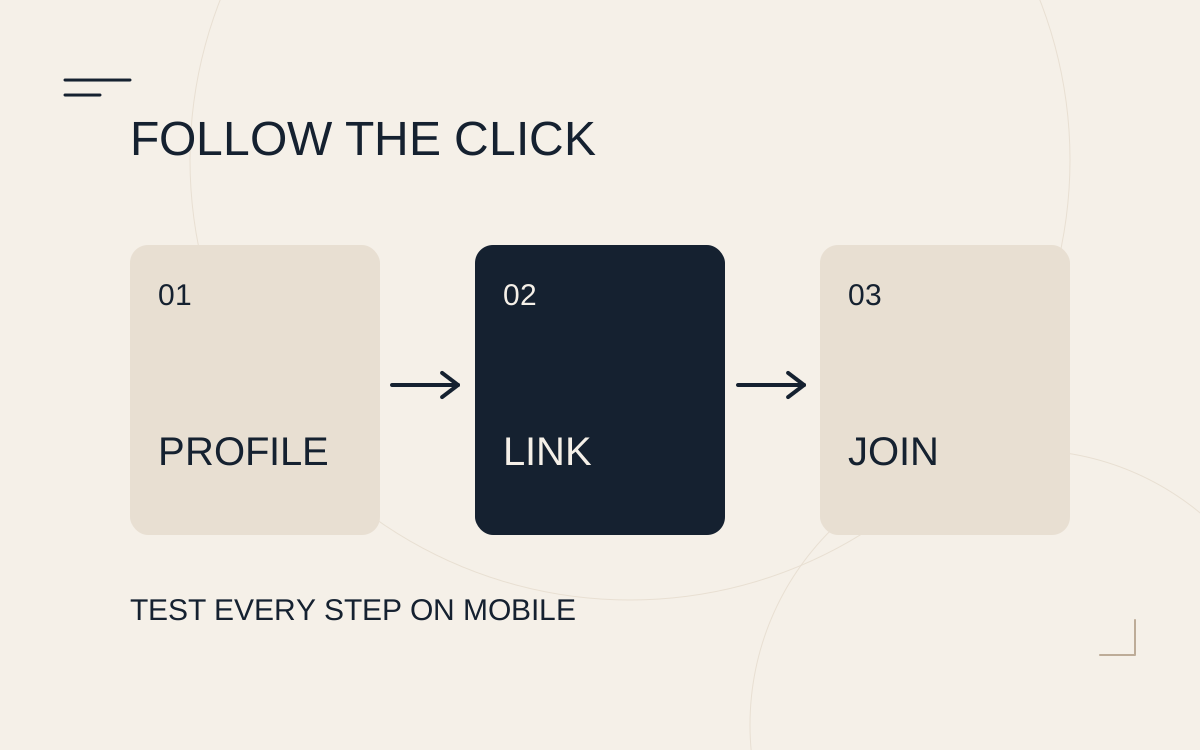
Review the route from public content to the subscription. Check for outdated descriptions, broken links and a mismatch between what attracts visitors and what the paid profile promises. Test the experience on a phone. More traffic will not resolve an unclear offer by itself.
3. Retention: is the ongoing experience consistent?
Review what subscribers receive over a normal month, not only on launch day. Look for production gaps, unclear extra charges and repeated questions that reveal confusion. Compare renewal information where available and use voluntary feedback to understand expectations. Keep cancellation and privacy choices respectful.
4. Revenue mix: what is behind the total?
Separate subscription revenue from other paid activity using the categories available in your reports. Note refunds and exceptional purchases. A single unusually large purchase can make a weak month look healthy; its absence can make the next month look like a collapse.
Use the calculator to explore explicitly hypothetical scenarios. It cannot replace your account records or establish an agency's contribution.
5. Capacity: where does work stop moving?
List the steps between an idea and a published piece: briefing, production, editing, approval and scheduling. Then record who owns each step and where delays occur. If every item waits for one person's approval, adding more ideas may increase the queue rather than output.
A workable plan protects your content boundaries and available hours. It should not depend on becoming constantly reachable or publishing material you do not want to make.
A review sheet you can use with your team
- Period: the dates, currency and revenue definition used.
- Signal: what changed, with the underlying number or observation.
- Possible explanation: a hypothesis, clearly separated from fact.
- Next action: one concrete change and the person responsible.
- Approval: what you need to sign off before anything changes.
- Review date: when the team will assess the result and what data it needs.
- Stop condition: the cost, workload or boundary that would end the test.
Example: profile visits stayed broadly stable while new paid subscriptions declined. A possible explanation is that an introductory offer ended. The next action is to review the offer and visitor mix, not immediately double the posting volume. This is an illustrative diagnosis, not a reported client result.
Ask your agency for a decision, not just a dashboard
A useful report explains what happened, what remains uncertain and what changes next. Ask the team to distinguish its actions from external factors. Request consistent time periods and a clear explanation of any revenue figure. Screenshots without context are difficult to evaluate.
You can use our case studies as a starting point for questions about scope and results, rather than as a prediction for your account. The right management discussion is about your current bottleneck and the work needed to address it.
Decide whether to refine the process or change the arrangement
If the team can explain the issue, agree a realistic test and review it. If responsibilities, approvals or reporting remain unclear, address those gaps directly. A new agency is not automatically the answer to every plateau.
When a change is appropriate, review the existing agreement and plan content, reporting and permitted access carefully. Our agency-switch page outlines the points to discuss. If you want Majestic Studios to consider your account, apply with your current situation and goals; do not send account credentials.
Four-step diagnosis
- Fewer profile visits? Check publishing and acquisition sources before changing the subscription price.
- Stable visits, fewer new subscriptions? Review the offer, destination link and profile description on the same device type.
- Stable subscriptions, lower earnings? Separate price changes, discounts, renewals and other revenue.
- Good plan, missed delivery? Assign the outstanding task to one owner with a due date.
Choose one bottleneck for the coming week. Changing price, profile and acquisition source together makes the result harder to interpret.